
We are an Active Partner in the Community Healthcare Movement.
We provide both immediate and long-term support to communities in need.
After Hurricane Helene devastated Western North Carolina, we donated to multiple community health organizations to help restore essential services. In January 2025, when wildfires swept through Los Angeles County, we provided direct financial support to several Federally Qualified Health Centers. We also met with Congresswoman Judy Chu’s staff to better understand the needs of families displaced by the Eaton Fire and to coordinate resources where they were most needed.
Our commitment goes beyond crisis response. We allocate a portion of our profits to charitable causes by supporting nonprofit partners, sponsoring new patient programs, and participating in community outreach events. Whether responding to natural disasters, addressing homelessness, or simply standing behind the mission of the organizations we support, we are dedicated to making a meaningful difference.
Advocacy and Public Policy
We actively advocate for policies that improve healthcare access and affordability.
Our team engages with policymakers at the local, state, and national levels to influence legislation that benefits underserved communities.
For over a decade, we were part of the movement to expand Medicaid in North Carolina.
Working alongside other organizations and community advocates, we remained committed to the cause until expansion was achieved. Once it passed, we shifted our focus to helping patients get enrolled by connecting with organizers in other states to learn how to do it better and faster.
Our advocacy doesn’t stop at legislation.
We raise awareness about critical healthcare issues through public campaigns, social media, and community events, ensuring our efforts have a broad and lasting impact.
Strategic Partnerships
We partner with other organizations, nonprofits, and mission-minded companies to amplify our efforts and reach more people, leveraging collective strengths for greater impact, while spreading the cost out in order to lessen each organization’s individually related expenses. We recognize and celebrate the contributions of partners and volunteers who support these initiatives.
If you are still asking, “Why should you work with Cornerstone Service Corp?
The answer is quite simple:
We deliver exceptional results and, when we commit to working with a community, you gain more than just a Chiropractic program; you gain a steadfast and dedicated ally.
FAQs
Adding chiropractic care to your organization can offer significant benefits, especially for patients with musculoskeletal conditions who may not otherwise have access to this type of treatment.
Chiropractic care is an effective first-option treatment for musculoskeletal issues. Techniques like manual manipulation and soft tissue therapy directly address the root causes of pain and dysfunction, often reducing or eliminating the need for prescription medications that can carry side effects or risk of dependency.
It also supports preventive health. Early intervention through chiropractic care can help children and adults maintain long-term wellness, reducing the need for more intensive treatments later in life.
For many underserved communities, Federally Qualified Health Centers (FQHCs), Rural Health Centers, Look-Alikes, and Indian Health Services are the only affordable access points for chiropractic care. Integrating these services helps bridge a critical gap in care for patients who might otherwise go without.
Additionally, FQHCs operate under a Prospective Payment System (PPS), which allows chiropractors to treat Medicare and Medicaid patients at a sustainable rate. In contrast, most private practices operate under a fee-for-service model, where Medicaid reimbursements often don’t cover the cost of care—leading many chiropractors to opt out of accepting Medicaid altogether. By offering chiropractic services within your organization, you make this essential care accessible to those who need it most.
The easiest way to answer this question is by listing national averages for malpractice insurance premiums. Afterall, they are the ones who are most well-informed on the risks and pay the claims.
Annual Malpractice Insurance Premium National Averages:
- OB/GYN: $46,000 ($50,000-$100,000 in major metropolitan areas)
- General Surgeons: $15,000-$30,000
- Primary Care/Osteopath (non-specialty): $5,000-$12,000
- Psychiatry: $6,000-$10,500
- Chiropractic: $1,000-$2,500
The average salary for an Associate Chiropractor in a Federally Qualified Health Center (FQHC) typically ranges from $86,000 to $111,000 per year. This range depends on factors such as geographic location, cost of living, and fair market value. Salaries for Associate Chiropractors are generally comparable to those of other doctoral-level providers, such as Physical Therapists.
When comparing payment models, paying chiropractors on a per-encounter basis is often more expensive than offering a salaried position. While per-encounter compensation may seem appealing, it can lead to higher overall costs and raise compliance concerns.
In particular, high per-encounter rates may draw scrutiny from the Centers for Medicare & Medicaid Services (CMS), especially if they result in unusually high visit volumes. This can lead to audits and may negatively affect both compliance and patient care.
For these reasons, salaried models are generally more compliant with federal guidelines and reduce the risk of triggering audits from oversight agencies. They offer a more stable and transparent approach to compensation, helping ensure that care delivery remains ethical, accountable, and aligned with regulatory expectations.
The truth is that you absolutely can. Most Community Health Centers already have many of the necessary components in place, including the staff and infrastructure. However, the real question is not whether you can, but whether you should do it alone.
To illustrate, imagine opening a box of toy building blocks. You have all the pieces needed to build something extraordinary, like a spaceship. For some, assembling it without instructions is an exciting challenge. But for most, the absence of a clear guide turns a fun project into a frustrating puzzle.
Now consider another scenario: you have a brand-new puzzle with a clear picture of the final result. You understand the general process and feel confident in your ability to complete it. But as you progress, you realize a few critical pieces are missing. You don’t know where to find them, how to replace them, or even that they were missing until it’s too late. Despite your best efforts, the final product falls short of your expectations.
Both situations are common when launching new programs. The greatest risk isn’t making a mistake, it’s what you don’t see coming. As the saying goes, “you don’t know what you don’t know.” When problems are visible, they can be solved. But when they’re hidden, they can lead to costly delays, lost revenue, and missed opportunities, especially when timing is critical.
Chiropractic care, fortunately, is a relatively low-cost program to implement. When done right, it can be launched quickly and efficiently, minimizing unnecessary expenses and generating revenue within the first year. The key is launching it well.
That’s where Cornerstone Service Corp comes in. We know the vendors. We have a proven, streamlined plan tailored to your specific needs. We simplify the process and ensure you understand every step. There’s no “secret sauce” withheld. We provide comprehensive training so your team is empowered and self-sufficient.
Most importantly, we don’t create dependency. When the time comes for us to step back, your organization will be fully equipped to continue without disruption. Your chiropractors and patients will be supported, and your program will thrive long after our direct involvement ends, thanks to our ongoing support services.
In short, while you can build it yourself, partnering with Cornerstone ensures you build it right—from the start.
For many Chiropractors, the early years of practice can be disillusioning. The job market is often saturated with positions in high-volume, profit-driven clinics that prioritize sales over care. These environments push package deals, unnecessary treatments, and supplement sales—leaving little room for meaningful patient interaction. Chiropractors who enter the profession to serve as doctors and healers often find themselves spending more time selling than treating.
Community Health Centers—including Federally Qualified Health Centers (FQHCs), Rural Health Centers, Look-Alikes, and Indian Health Service organizations—offer a different path. These settings provide a space where Chiropractors can return to the heart of their profession: caring for people.
Opportunity for Genuine Patient Care: These organizations are mission-driven, not profit-driven. Chiropractors are empowered to focus on delivering high-quality, evidence-informed care without the pressure to upsell.
Employment Opportunities: Stable, salaried positions in CHCs offer security that is often hard to find in the private sector, especially for new graduates.
Making an Impact: Chiropractors in CHCs serve communities that often lack access to musculoskeletal care. The work is not only clinically rewarding—it’s deeply meaningful.
Professional Fulfillment: In these settings, Chiropractors are respected as healthcare providers, not salespeople. They can practice as doctors, collaborate with other professionals, and build long-term relationships with patients.
Escape from Profit-Driven Models: CHCs offer a way out of the commercialized care model. Chiropractors can focus on what they were trained to do: help people heal.
For Chiropractors seeking purpose, stability, and the chance to make a real difference, Community Health Centers offer a compelling and refreshing alternative.
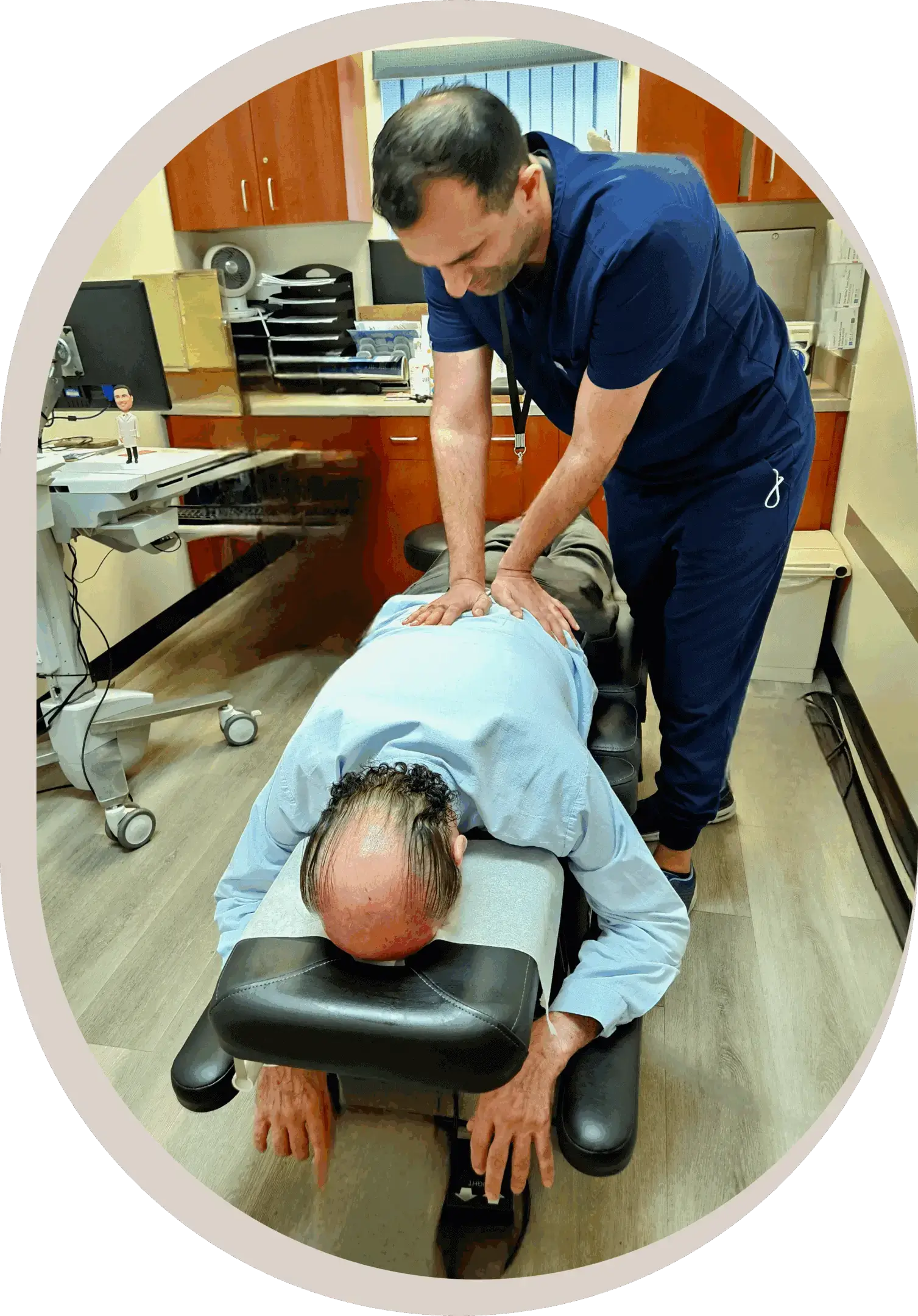
Make an Impact
Apply now to become part of our growing network of chiropractic professionals and help improve patient outcomes.